Why NEPA Basements Flood: Coal Seam, Mine Subsidence and Rainwater
Three forces stack up in Lackawanna County to make basement water inevitable: abandoned anthracite mine subsidence, pyrite shale fill backfill from the 1950s, and 50 inches of annual snow melting against frozen ground. Here is how they interact.
Published · By Patrick Kelleher
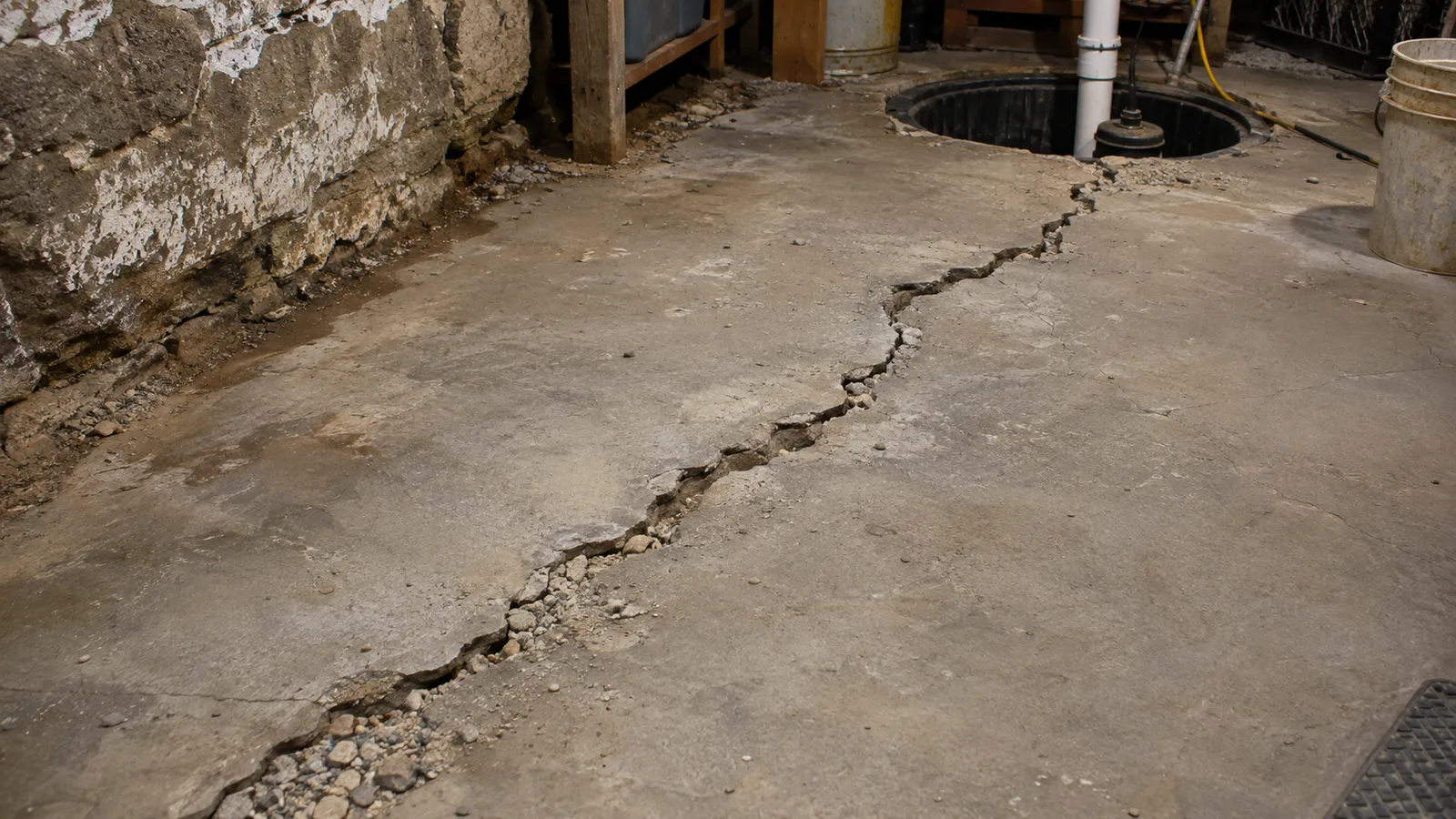
NEPA basements flood for three stacked reasons: abandoned anthracite coal mine subsidence under most of Lackawanna County, pyrite shale fill backfill in postwar housing developments, and 50 inches of annual snow melting against ground that stays frozen 36 inches down from December through March. Any one of these is a serious water problem on its own. Stacked together they make basement water inevitable in Dunmore, Scranton, Taylor and Carbondale. Here is how each one works and why most basements eventually need a proper waterproofing system.
What does coal mine subsidence do to a Dunmore basement?
Lackawanna County sat on top of the richest anthracite coal deposits in the country from the 1830s through the 1950s. The historic workings under Dunmore, Scranton, Taylor and Carbondale were often shallow (within 50 to 200 feet of the surface) and extensive. When the mines closed, the underground voids started collapsing slowly, a process called subsidence. In Dunmore the subsidence is slow enough to be measured in inches per decade, but it is constant. What that does to a basement: it redirects groundwater paths on a slow timeline. A house that sat dry for 40 years can suddenly start taking on water because a long-abandoned mine drainage adit two blocks away collapsed and shifted the local water table.
Which neighborhoods have the worst subsidence?
Carbondale has the most active mine subsidence in Lackawanna County because the historic workings under the central grid were the earliest and the shallowest. The city is still covered by the PA DEP mine subsidence insurance program, which pays claims for documented subsidence damage to foundations and structures. Taylor is second worst, especially the blocks around the old Pyne Breaker site. Dunmore is active but slower, with the worst areas being the historic Bucktown grid and parts of the Hilltop section. Scranton varies by neighborhood, with Hill Section and West Scranton seeing less and the downtown Flats and South Side seeing more.
What is pyrite shale fill and why does it matter?
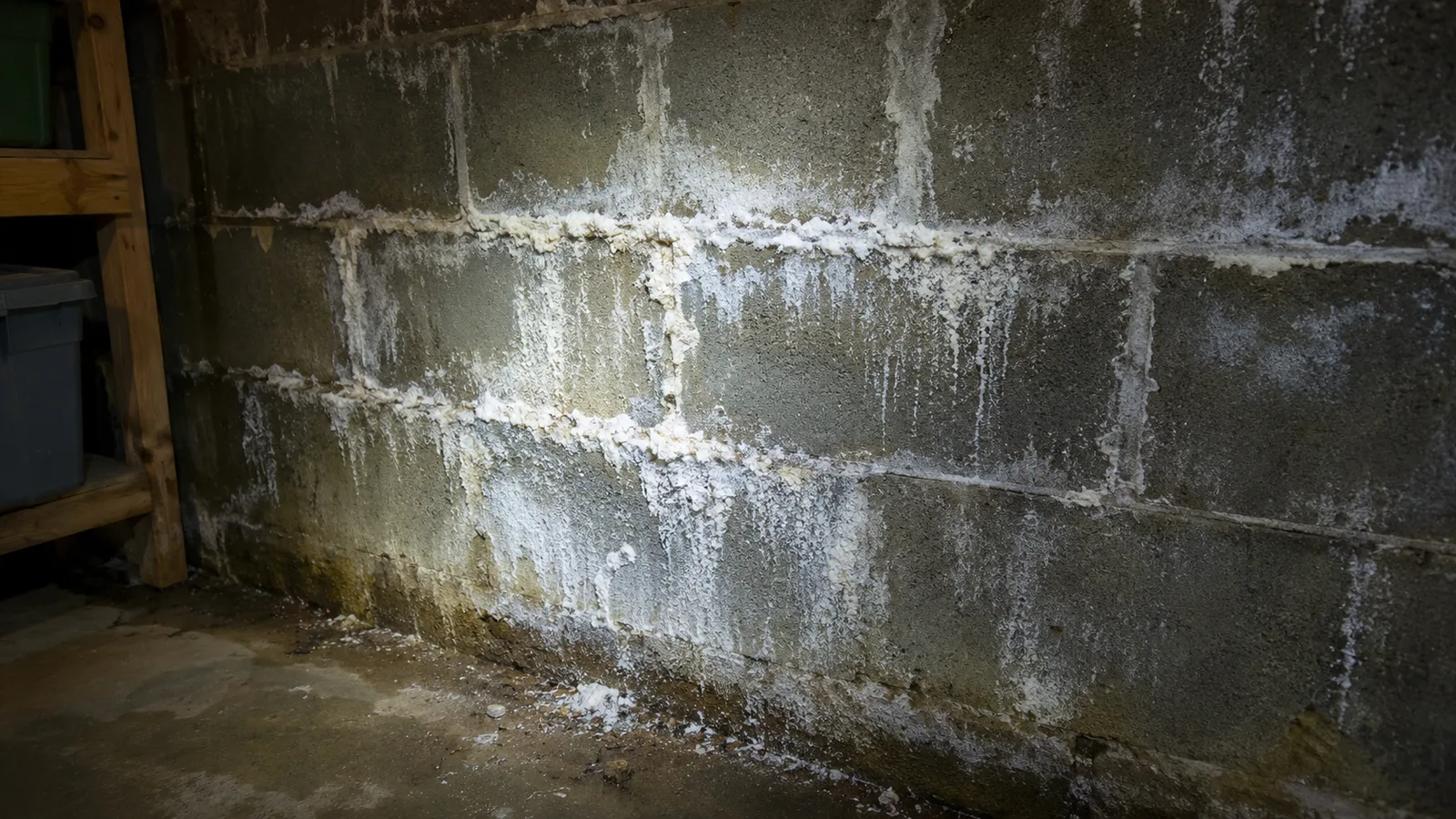
Pyrite shale fill is a kind of mine waste rock that was trucked in cheap during the postwar housing boom and used as foundation backfill against thousands of basement walls in Dunmore, Scranton and the surrounding boroughs between about 1948 and 1975. The problem: pyrite reacts chemically with water and oxygen to form iron sulfate and sulfuric acid, which expands the shale by 2 to 5 percent in volume. That expansion pushes laterally against the basement wall, especially at the 36 inch frost line where water sits during spring thaw. The result: horizontal cracks along the middle of block foundations, and in bad cases, bowed walls pushed inward 1 to 3 inches over 20 years.
How do you know if your house has pyrite shale backfill?
If your Dunmore house was built between 1948 and 1975 on a block or poured-concrete foundation, there is maybe a 60 percent chance it has pyrite shale fill against at least one wall. The signs: horizontal cracks on the exterior-facing walls at the 36 inch mark, rust-orange staining at crack locations (that is the sulfate), block courses that are not plumb when you put a 4 foot level on them, and a slight exterior wall bow visible from the basement side. The Monsignor McHugh neighborhood, Smith Park area, Dunmore Corners, Birney Avenue in Moosic and most of Jessup's hill section are all areas where we see this routinely.
Why does 50 inches of snow a year matter?
It is not the snow itself, it is what happens when it melts. The ground in Dunmore stays frozen 36 inches down from mid-December through mid-March. Snow accumulates on top. When a warm spell hits in late February or March, the snow melts fast, but the ground is still frozen so the water cannot soak in. All that meltwater runs along the frozen ground surface, finds the warm spot next to your foundation wall where the house is radiating heat, and pools against the footing. From there it pushes up through the cove joint, into any wall crack, and across the frost line. Spring thaw is the single biggest basement flooding event every year in NEPA, usually in a 5 to 10 day window in March.
How do these three forces stack up?
The reason NEPA basements are a tougher waterproofing problem than, say, basements in Harrisburg or Lancaster is that these three causes compound each other. Mine subsidence shifts a water path. The new water path hits a block wall that is already weakened by 50 years of pyrite shale fill expansion. Spring thaw delivers a flood of water at exactly the frost line where the pyrite damage sits. One cause creates the vulnerability, another stresses it, the third delivers the water load. This is why we tell every NEPA homeowner straight: your basement will see water eventually, the only question is whether you install the fix before or after a flood event.
What is the right fix for a NEPA basement?
For almost every Dunmore basement, the answer is an interior perimeter drain system tied to a proper sump pit with a DC battery backup. The drain relieves hydrostatic pressure at the cove joint and inside the wall. The sump moves the water out. The battery backup keeps the system running during PPL outages, which hit during exactly the storms that cause flooding. On walls with pyrite shale damage, we add carbon fiber straps on 48 inch centers to stabilize the horizontal crack and stop further movement. Total package for a 1,200 square foot Dunmore basement runs 6,000 to 12,000 dollars depending on wall condition and whether crack injections or carbon fiber are needed. See our basement waterproofing service page for the full scope.
When is exterior excavation the right call?
Exterior excavation at 15,000 to 30,000 dollars is the right call about 1 time in 10 in Dunmore. It is the correct answer when a wall is cracked or bowed on the outside and the exterior grade needs to be rebuilt, or when the pyrite shale damage is severe enough that we need to remove the backfill and replace it with washed stone. In the rowhouse grid of Bucktown and Hilltop where houses sit tight against sidewalks, exterior excavation is often physically impossible anyway. For most Dunmore houses, interior drain is faster, cheaper, less disruptive, and just as effective at stopping water.
Does mine subsidence insurance cover basement work?
Yes, in specific cases. The PA DEP mine subsidence insurance program covers structural damage caused by a documented active subsidence event. It does not cover routine basement water from groundwater or spring thaw. If you are in Carbondale or Taylor and you have new cracking that can be documented as subsidence-caused, the program may cover part of the repair. We provide the written foundation report, photo documentation and crack measurement data needed for a claim at no extra cost during our free inspection. You submit the claim yourself.
If you are in Dunmore or anywhere in Lackawanna County looking at basement water, a crack you cannot explain, or just want to get ahead of the next spring thaw, give the shop a call and we will walk through what is probably going on before we come out.