Signs Your Basement Needs Waterproofing This Winter
If your Dunmore basement shows any of these 9 warning signs in October or November, you are heading for a wet February. Here is what to look for and what to do before the ground freezes 36 inches down.
Published · By Patrick Kelleher
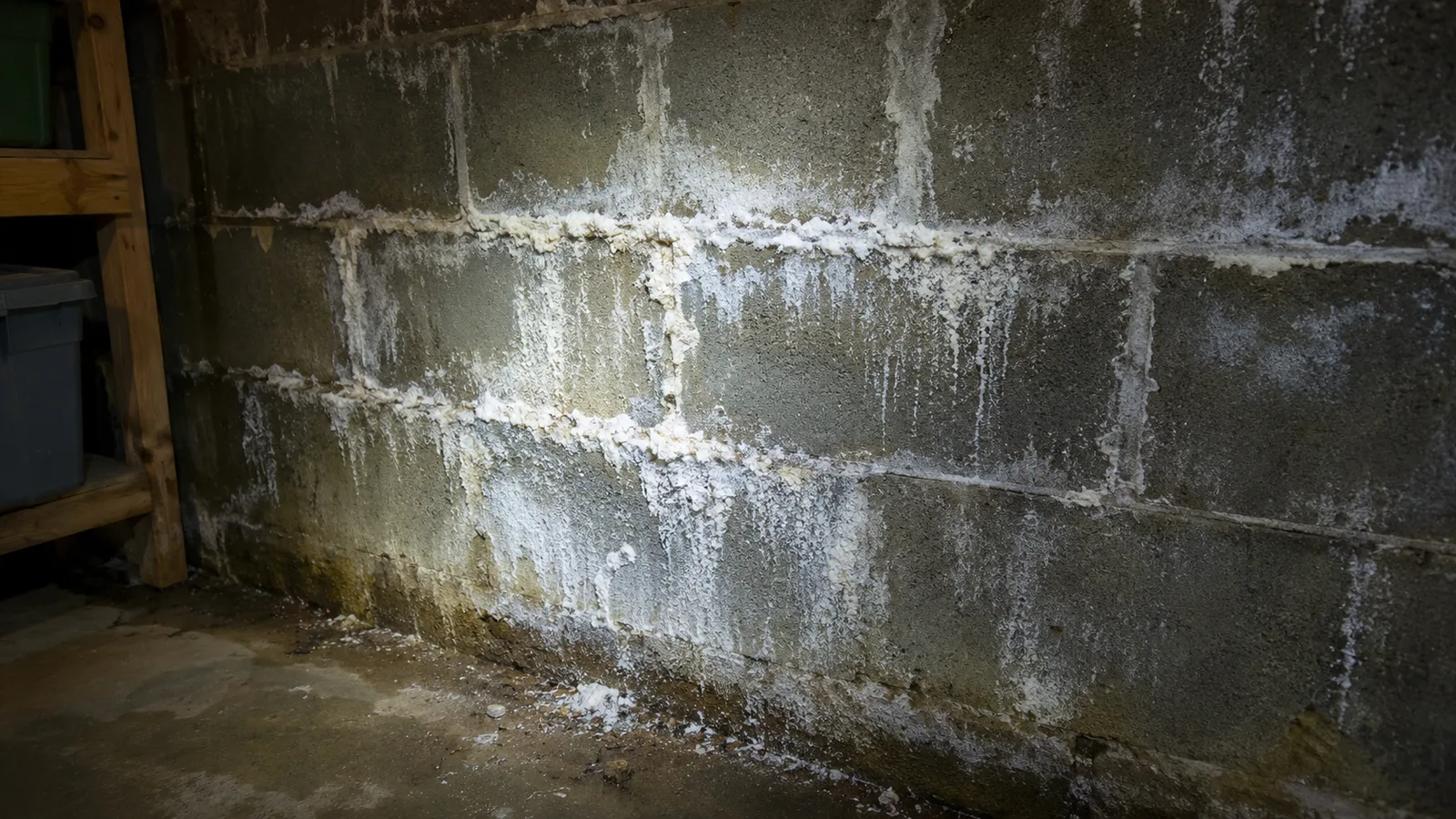
If your Dunmore basement is showing efflorescence on the walls, water in the cove joint, a sump pump running every 20 minutes, or a musty smell that comes back every spring, you are heading for a wet basement by February. In NEPA, waiting until a hard freeze hits is the single most expensive mistake a homeowner can make. Here are the 9 warning signs and what they really mean.
1. White chalky deposits on the foundation wall
Efflorescence is the fancy name for the white powder you see on basement walls, especially on cut-stone and block foundations in the Bucktown grid and the Hilltop section. It is mineral salts left behind after water evaporates out of the wall. If you see it, water is actively moving through your wall. Catch it now: wire-brush the salt off, watch for 2 weeks, and if it comes back, the wall is wicking water from the outside. An interior perimeter drain stops the hydrostatic pressure that drives the water through the wall.
2. A damp dark line where the floor meets the wall
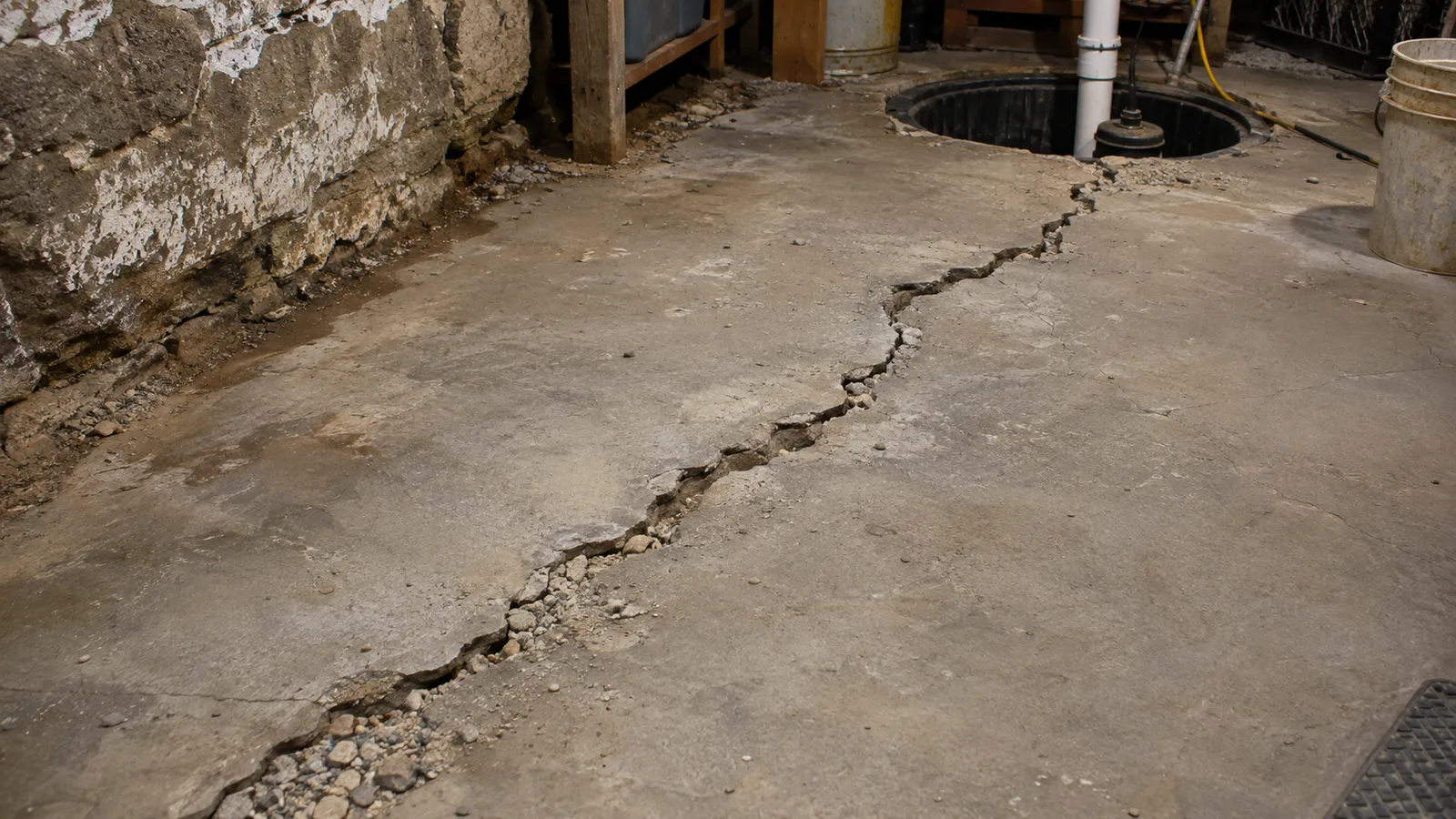
This is the cove joint leak and it is the number one Dunmore basement water problem. The floor-to-wall seam is a cold joint, not a sealed one, and water pushes up through it whenever the groundwater rises. You will see the line go wet after a hard rain or during spring thaw and dry out in between. Catch it now: run a dehumidifier through October and November and watch the cove joint. If the line keeps coming back wet, you need a perimeter drain before February.
3. Hairline vertical cracks in a poured concrete wall
Most poured walls in Dunmore houses built after 1960 have shrinkage cracks from the original pour, usually every 15 to 20 feet. Under 1/8 inch wide they are not structural but they will leak during a spring thaw event. Catch it now: measure every crack with a feeler gauge, photograph it with a dated note. If the crack is dry in November and leaking in March, a polyurethane injection is a 400 to 900 dollar morning job that permanently seals it.
4. A horizontal crack along the middle of a block wall
This is the serious one. A horizontal crack running along the wall at the 36 inch frost line means lateral soil pressure is pushing the wall inward. Pyrite shale fill in 1950s and 1960s Dunmore subdivisions is the usual cause. If the wall is bowed more than 1/4 inch at the crack, it needs carbon fiber straps set with structural epoxy on 48 inch centers. Do not wait on this one. A horizontal crack that looks like nothing in October can become a bowed wall emergency by April.
5. Sump pump cycling every 15 to 30 minutes with no rain
If your pump is running regularly in dry weather, the water table is already high and your perimeter drain or cove joint is bringing water in constantly. This is normal in some Dunmore houses in spring, but if it is happening in October and November, you have a bigger water load than your pump can handle long-term. Catch it now: check the pump age. Plastic pumps over 8 years old are likely failures by February. Cast-iron Zoeller pumps go 15 to 20 years and are worth the 300 dollar price difference.
6. A sump pump that has never been tested
If you cannot remember the last time you poured 5 gallons into your pit to confirm the pump cycles, it has never been tested. The failure mode is simple: the pump works fine in a dry pit test but the float sticks when real silt and debris build up. Catch it now: lift the lid, visually inspect the pit, pour water, confirm the pump kicks on and shuts off at the correct level. If the float is sluggish or the pump sounds rough, replace before winter.
7. No battery backup on the primary sump pump
This is the single biggest risk factor for a flooded Dunmore basement. PPL power cuts hit NEPA during every big winter storm, which is exactly when the pump is needed. A DC battery backup pump runs 6 to 10 hours on a single charge and handles 95 percent of outages we see. If you do not have one, you are one storm away from a flooded basement. A combo primary and backup install runs 1,400 to 2,500 dollars.
8. A musty smell that will not go away
Musty basement air is mold spores from high humidity. In Dunmore, basement relative humidity above 65 percent feeds mold on wood framing, cardboard storage boxes, drywall, and the undersides of carpet. The smell comes from the mold, not the moisture itself. Catch it now: buy a 15 dollar humidity gauge, set it in the basement. If you see over 60 percent in October or November, you need either a dehumidifier upgrade or a full crawl space and basement encapsulation depending on construction type.
9. Exterior grade that slopes toward the foundation
Walk around your house with a level and check the ground pitch. If the dirt or mulch within 6 feet of the foundation slopes toward the wall, every rain and every snowmelt is dumping water against your footing. The fix is simple and cheap: add topsoil to create 6 inches of fall over 10 feet away from the wall. This alone solves maybe 30 percent of the wet basement calls we get in the Clarks Summit and Fairway Road area where grading has settled over 20 years.
When to call for a free Dunmore basement inspection
If you see 3 or more of the signs above in your basement in October or November, do not wait. Spring thaw hits Lackawanna County hard every March and the ground stays frozen 36 inches down right through February, which means water has nowhere to go but your basement floor. Our free on-site inspection takes about 45 minutes and you get a written flat-rate quote the same visit. Catching a problem in November costs half of what fixing a flooded basement in March costs.
If you are sitting in Dunmore looking at any of these signs and want a straight answer before winter, give the shop a call and we will walk through it with you on the phone first.